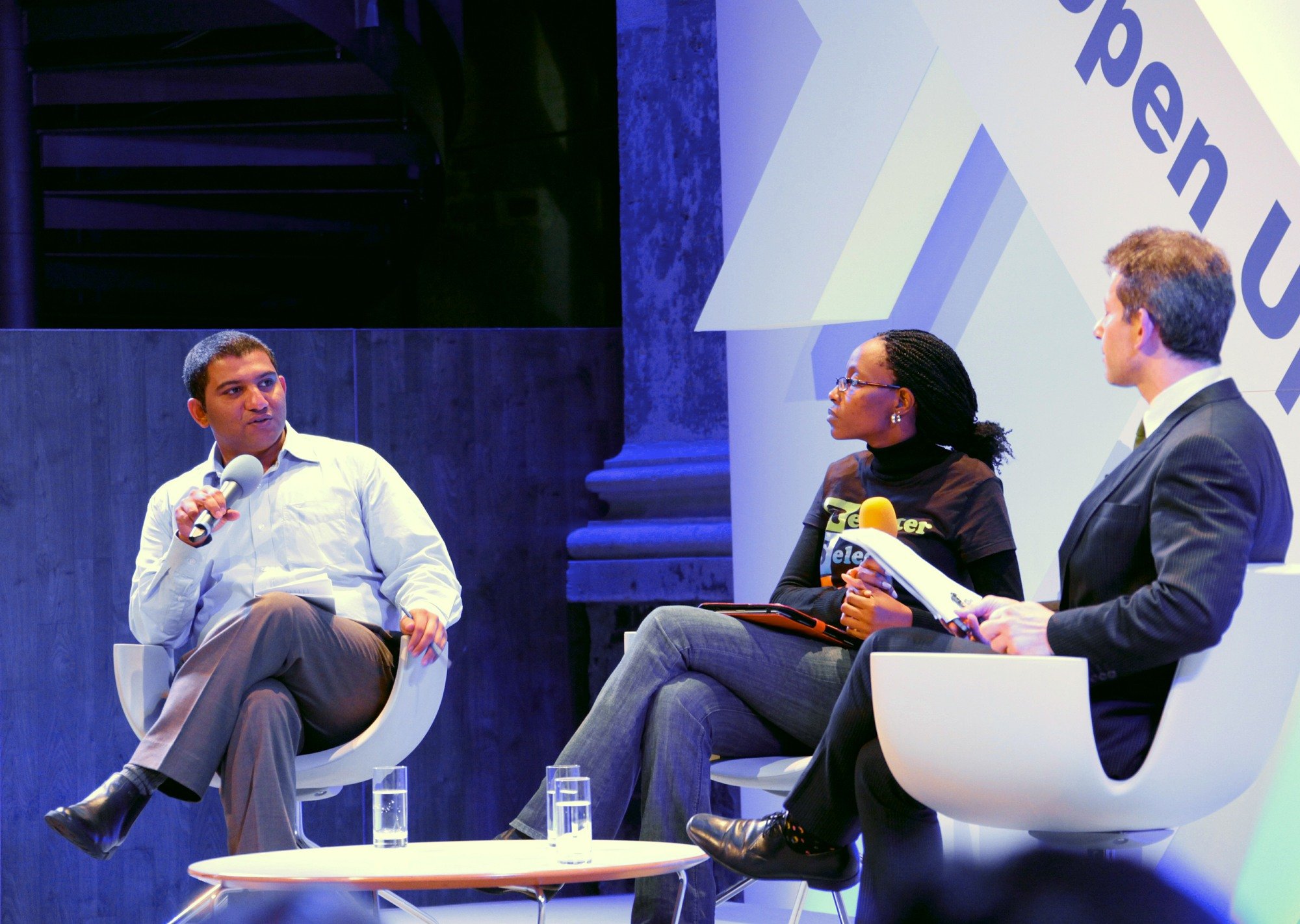
At one annual gathering, we made a deliberate decision: there would be no formal fundraising pitch.
The gathering brought together a community of people who cared deeply about the mission. We were there to strengthen relationships and celebrate what we had accomplished together over the previous year. There was no carefully timed appeal from the stage. No thermometer tracking a campaign goal. No moment when the room shifted from community into solicitation.
Instead, we ate together.
During meals, people relaxed. They caught up with one another. They shared what had changed in their lives and what they had seen in the work. Then the questions began to emerge naturally.
“How can I help?”
“Can we bring this program to my city?”
“Who else needs to know about this?”
Those conversations became the center of the funding strategy. Over time, the community grew to more than 250 donors and $850,000 in annual giving. The monthly-giving network lasted for more than five years. Both the number of donors and the annual funding expanded by approximately 10 to 20 percent each year, largely through the widening circles of people already connected to the community.
We removed the pitch because the relationships were capable of leading somewhere larger than a transaction.
That experience reinforced something I have seen across many impact organizations: the people most likely to fund your mission are often already closer than you think.
Most organizations have already struck gold
When leaders decide they need more funding, they often begin by looking outward. They build prospect lists, search foundation databases, study wealthy individuals, and pursue introductions to people who have no existing connection to the organization.
External prospecting has a place. It should rarely be the first place you look.
Most organizations have already struck gold without fully recognizing it. Their immediate network contains board members, executives, donors, investors, advisors, champions, staff members, alumni, volunteers, partners, and people who have followed the work for years. This group already understands some part of the mission. Many are already emotionally invested in its success. Some have relationships that can open entirely new circles of support.
The first step is to map that network.
This is more than collecting names. A useful map helps you understand the quality and movement of each relationship:
- How enthusiastic is this person about the work?
- How strong is the relationship today?
- Have they been invited to participate recently?
- Will they take a call?
- Do they follow through when they agree to help?
- Might they introduce the organization to aligned people or institutions?
- What role would fit them now?
I pay close attention to three signals: enthusiasm, activation recency, and network potential.
Three signals to map first
Immediate networkLook for active belief, advocacy, curiosity, and energy around the mission.
Notice which relationships are moving and which have gone quiet without a next step.
Value credibility, trust, and connection alongside a person’s individual giving capacity.
Enthusiasm tells us whether someone is merely familiar with the work or genuinely wants it to succeed.
Activation recency tells us whether the organization has created a meaningful way for that person to participate. A passionate supporter can become dormant when nobody calls, asks for advice, shares progress, or offers a next step.
Network potential helps us see beyond the person’s individual capacity. Someone may never make the largest gift in the room and still become the bridge to the relationship that changes the organization.
That last point matters. The most consequential connections often emerge from unexpected places within the team or greater community. If someone is in the organization’s inner circle, that person is valuable to speak with and invite into a fitting form of support.
One relationship can change the scale of the work
A recent client needed significant funding. We began by looking at the relationships already surrounding the organization.
One long-time advisor stood out. She understood the mission, had credibility with the leadership, and had a relationship with a family foundation. The organization did not need to discover that foundation through a database. It needed to recognize the bridge already in front of it and ask the advisor for an introduction.
We first met the advisor in person. Then we met her family in person.
The relationship developed over approximately eight months. There were meetings, diligence processes, proposal revisions, leadership conversations, and board involvement. We stayed close throughout, helping the organization prepare for each step and strengthening the quality of every conversation.
The result was a $4 million donation received by the organization.
It is tempting to compress a story like this into a simple fundraising lesson: ask your advisors for introductions. That is part of it. The introduction opened the door. The funding came through what happened afterward.
Again and again, the turning point in major funding relationships arrives when people develop a genuine, transparent, and vulnerable connection with one another. The conversation becomes more honest. Leaders can speak clearly about the opportunity and the risk. Funders can share what they care about, what concerns them, and what they need to believe. Both sides can decide whether they want to build something together.
Diligence still matters. Evidence still matters. Governance, financial clarity, leadership, and a credible plan still matter. Relationship does not replace institutional readiness. Relationship makes it possible for people to work through those questions with greater trust and candor.
A single network connection created access to this opportunity. Eight months of thoughtful cultivation turned access into a relationship strong enough to support a $4 million decision.
Your network can also diagnose the organization
Immediate-network mapping does more than reveal funding opportunities. It can expose the fundamentals that need attention.
Board members, executives, donors, advisors, and champions are usually among the people most familiar with the mission. If they are enthusiastic, willing to take calls, and happy to make introductions, the organization has relational momentum.
If they consistently hesitate, that is useful information.
Their hesitation may point to an unclear impact story. They may not understand how the organization uses money or measures progress. They may lack confidence in governance, leadership, decision-making, or financial management. They may care deeply about the mission and still feel unprepared to put their own reputation behind it.
The answer is not to push harder for introductions. The answer is to listen carefully and strengthen the institution.
Ask what they would need to see before recommending the organization to someone they trust. Their responses can reveal work that belongs in organizational reputation, governance and leadership, evidence, or impact communication. This is one reason funding relationships cannot be separated from the rest of the organization. Capital follows confidence, and confidence is built through both human trust and institutional proof.
Create environments where relationships can lead
The annual gathering that grew into a network of more than 250 donors worked because its purpose was larger than fundraising.
People came to celebrate shared progress, reconnect with one another, and experience the community around the mission. They were able to see that they belonged to something. They also met other people who had made the same choice to participate.
That changed the quality of the conversation.
A formal pitch tells people when and how to respond. A relationship-centered gathering creates room for people to discover their own questions and imagine their own role. During a meal, someone might ask about bringing a program to a new city. Another person might recognize a connection to a foundation, company, or civic leader. A donor might hear another donor explain why the work matters to them.
None of this means an organization should become vague about its funding needs. Clarity matters. People should understand what resources are required, what those resources will make possible, and how decisions are made. The difference is that the invitation emerges within a relationship rather than interrupting it.
This approach also changes stewardship. Donors are not contacted only when the organization needs another gift. They remain part of the community. They see what happened because they participated. They develop relationships with one another as well as with the organization. The network becomes capable of renewing and expanding itself.
That is how a collection of individual gifts can become a durable funding community.
Invite people into the role that fits them
Many organizations reduce every funding relationship to one question: Will this person write a check?
A stronger question is: How is this person ready to participate?
Someone may be ready to give. Someone else may be ready to introduce you to a family foundation. Another person may offer advice that improves the strategy. A board member may host a conversation. An investor may help clarify the economics. A champion may carry the story into a room the organization could not enter on its own.
Activation is the movement from passive support to meaningful participation. The invitation should fit the person and the relationship.
A useful sequence is:
- Begin with relevance. Connect the work to something the person already values, understands, or has chosen to build.
- Make the opportunity legible. Explain what can become possible, what resources are required, and why the organization is positioned to act.
- Offer a fitting role. Invite a gift, investment, introduction, conversation, visit, act of advocacy, or piece of advice that matches the person’s readiness.
- Agree on the next step. End with a specific action, a clear owner, and an appropriate timeline.
The organization also needs a reliable way to remember what was promised. Every introduction, follow-up, document, and next conversation should have an owner and a date. A relationship should never depend on one leader’s memory or an inbox search conducted six months later.
Systems can help preserve context and expand capacity. They should support human judgment rather than automate trust.
A no can create a safer relationship
I have received too many direct refusals to count.
Early in my fundraising career, I took them personally. I treated a no as the end of the road. I assumed the opportunity had failed and the relationship no longer had somewhere to go.
Experience taught me something different.
A no is the end of the current ask. It does not have to be the end of the relationship.
Someone who declines a gift may be willing to offer advice. They may make an introduction. They may take another call after the organization has built a stronger evidence base. They may become interested when a future program aligns more closely with what they want to support. They may simply remain connected and help the organization understand how its work is perceived.
A refusal must be respected. Relationship building is not the practice of repeating the same request until someone gives in. The continuation has to be mutual.
In fact, some of the strongest relationships begin in a space where it feels safe to say no. The person learns that the organization values their judgment and dignity beyond the transaction. The organization learns more about fit, readiness, timing, and trust.
The real skill is finding the continuation that serves both the relationship and the mission.
That continuation might sound like:
- “Thank you for being direct. Would you be open to telling us what would make the work stronger?”
- “Is there someone else you think we should learn from?”
- “May we keep you updated as the evidence develops?”
- “Would another form of participation feel more useful right now?”
Sometimes the answer will still be no. Honor it. Sometimes the conversation will reveal a new path. Stay curious enough to notice the difference.
Build your first relationship map
You do not need a sophisticated database to begin. Start with one priority funding objective and the people already around it.
Gather the organization’s leaders and create an initial list across these groups:
- Board members
- Executives and staff
- Current and past donors
- Investors and business partners
- Advisors
- Champions and advocates
- Volunteers and alumni
- Community partners
- People in the broader fanbase who consistently show up
Then evaluate each relationship:
| Signal | Question |
|---|---|
| Enthusiasm | How strongly does this person believe in and advocate for the work? |
| Relationship strength | How much trust, shared history, and mutual understanding exist? |
| Activation recency | When were they last invited to participate meaningfully? |
| Willingness | Will they take a call, offer advice, make an introduction, or host a conversation? |
| Follow-through | Do they complete the next steps they accept? |
| Network potential | Could they connect the mission to aligned people or institutions? |
Do not use the exercise to rank people solely by perceived wealth. A person’s greatest value may be insight, credibility, advocacy, or access. The stunning connections are often the ones nobody thought to ask about.
Choose three relationships for deeper listening. For each one, define a fitting invitation and a clear next step. Then follow through exactly as promised.
Repeat the process. Update the map as people move closer to the work, introduce new circles, or reveal that the organization has fundamentals to strengthen.
Funding begins with belonging
Organizations need capital. They also need the trust, evidence, governance, leadership, and operating discipline that make capital useful.
The immediate network sits at the intersection of all of these things. It contains people who can fund the work, connect it to new communities, test its credibility, challenge its assumptions, and help it grow. Their willingness to participate is both an opportunity and a signal.
Begin with the people already close enough to care.
Ask what they see. Ask what they need. Ask how they would like to help. Give them a role that fits. Create environments where authentic relationships can develop. Build a system that remembers every promise and honors every boundary.
You may discover that the next transformational gift is not hidden in a distant prospect database. The relationship that leads to it may already be sitting at your table.
Identifying details in the client examples have been withheld to protect confidentiality.
© 2026 Dr. Daniel T. Cordaro. Published by First Rain Group. All rights reserved.